


We all have them, the ideas about ourselves that stop us from doing things we might otherwise do.
They are often known as limiting beliefs, and they can be as strong as any wall, as restrictive as any barrier we are ever likely to meet.
Often when you are considering doing something that you feel you could do, but hesitate, they whisper:
“I am bad at maths.”
“I’m not creative.”
“Don’t be stupid, that’s not you.”
“That kind of thing doesn’t happen to someone like you.”
But here’s the most saddening thing of all: they often have very little to do with facts, almost nothing to do with verifiable, recent evidence. They are legacy beliefs that originate from a smaller experience - a reaction to something that happened, or something that someone said, long, long ago. Over time they compound and build themselves into something very real for you.
What started as a small snowball then rolls, almost inevitably, down the hill, into something so big it is hard to imagine you could ever stop it. It becomes almost impossible to imagine yourself without it.
Why are they important?
Because they reduce the size of your life.
They are invisible barriers to what you could be. They show themselves in the small decisions - to do one thing or another - but also in the bigger ones: applying for a job, starting something new, speaking up, or simply talking to that new person.
They are powerful filters.
They shape attention - what evidence you notice.
They bias interpretation - how you explain events.
They affect behaviour - what risks you are willing to take.
The brain then quietly confirms them through what psychologists call confirmation bias. So the life loop of a limiting belief looks something like this:
Belief → Perception → Behaviour → Reinforcing evidence → Stronger belief
Every time a limiting belief stops you from doing something you wanted to do, but didn’t, a door closes that becomes even harder to open next time.
Every time a limiting belief curtails an idea that might have led to a different future, your life becomes a little bit smaller.
So what to do?
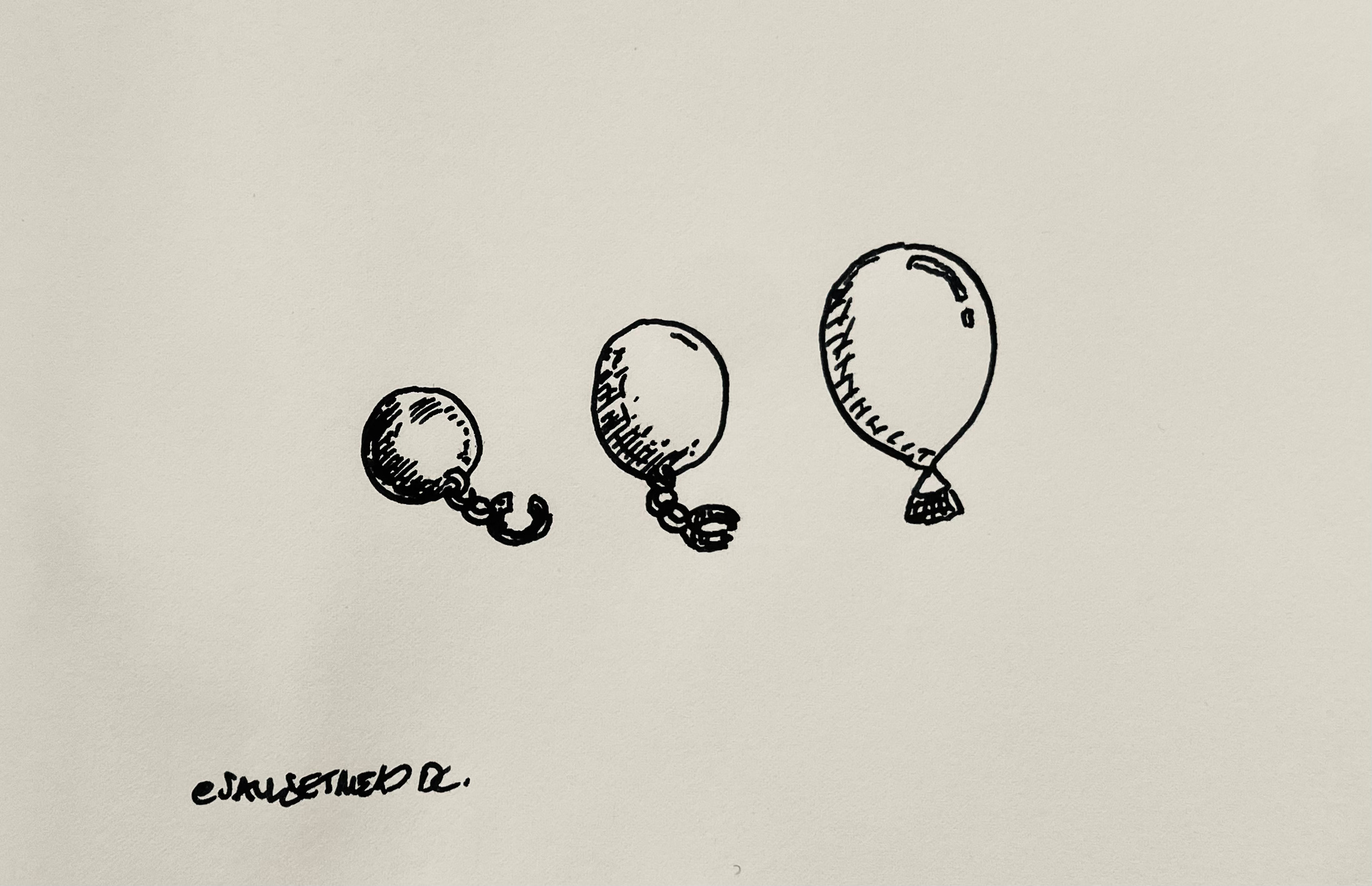
First, it helps to realise that without actively tackling them, they will not simply fade away. They are far too powerful a foe for that. Wishful thinking alone will not cut it.
Liberating thinking, however, might.
A way of approaching the stuff of life that helps us move past what we believe we cannot do or be.
And it is here we find the limiting belief’s greatest enemy: the liberating belief.
A liberating belief does not pretend reality is different, it simply opens a door where the limiting belief closed one.
Where the limiting belief says:
“I’m not creative.”
The liberating belief says:
“Creativity is something people develop.”
Where the limiting belief says:
“That’s not for people like me.”
The liberating belief says:
“Why not?”
These beliefs are not fantasies, they are simply more generous interpretations of possibility.
In practice, they often start small, they are not declarations of perfection, but statements of movement.
Not I am brilliant at this.
But I am learning to get better at this.
You might recognise these as affirmations. When used well, they act as bridges between the old belief and the new one. Not trying to leap instantly from limitation to certainty, but gradually creating a different story about what might be possible.
Limiting beliefs narrow the map of your life.
Liberating beliefs helps redraw it.
Finding them
The first step is noticing them.
Limiting beliefs often hide in the background of our thinking, so familiar we hardly recognise them as beliefs at all. They feel like facts.
But if you listen closely, you will hear them in the quiet moments of hesitation, in the internal voice that explains why something is not for you.
That is where they reveal themselves.
Exploring them
Once you notice them, you can begin to question them.
Where did this belief come from?
When did it start?
What experience first gave it life?
Often the answer lies much further back than you might expect - a comment at school, a moment of embarrassment, a passing judgement that somehow stuck.
Seen in the light of today, they rarely look quite as solid as they once did.
Reversing them
Here is where liberating beliefs begin their work.
Take the limiting belief and gently turn it around.
“I’m terrible at speaking in front of people.” (one I held for quite a while myself).
Becomes:
“Speaking in front of people is a skill people learn.”
The aim is not instant transformation, but opening a possibility.
A belief that allows you to take one small step that the old belief would have stopped.
Stepping outside of yourself
Sometimes the easiest way to challenge a limiting belief is to step outside your own story.
Ask yourself:
Would I say this to a friend if I didn’t think that belief was right?
Would you tell someone else that they are simply “not creative”, or that something “isn’t for people like them”?
Almost certainly not.
Yet we allow ourselves to live inside these ideas for years.
Seeing them from the outside often reveals just how arbitrary they really are.
Using and nurturing liberating beliefs
Like any belief, liberating beliefs strengthen with use.
Each small action that contradicts the old belief becomes evidence.
Each time you try something that the old belief said you couldn’t do, the snowball changes direction.
Slowly, quietly, a different loop begins to form:
New Belief → New Action → New Evidence → Stronger Belief
And with it, something else begins to expand.
Not just what you do.
But what you believe your life might contain.
Yes, I think beliefs are one of the most underrated parts of mindset work.
Saul - this is another great piece. I have just upgraded because I really love reading your posts and would like to reward that. Thank you!