


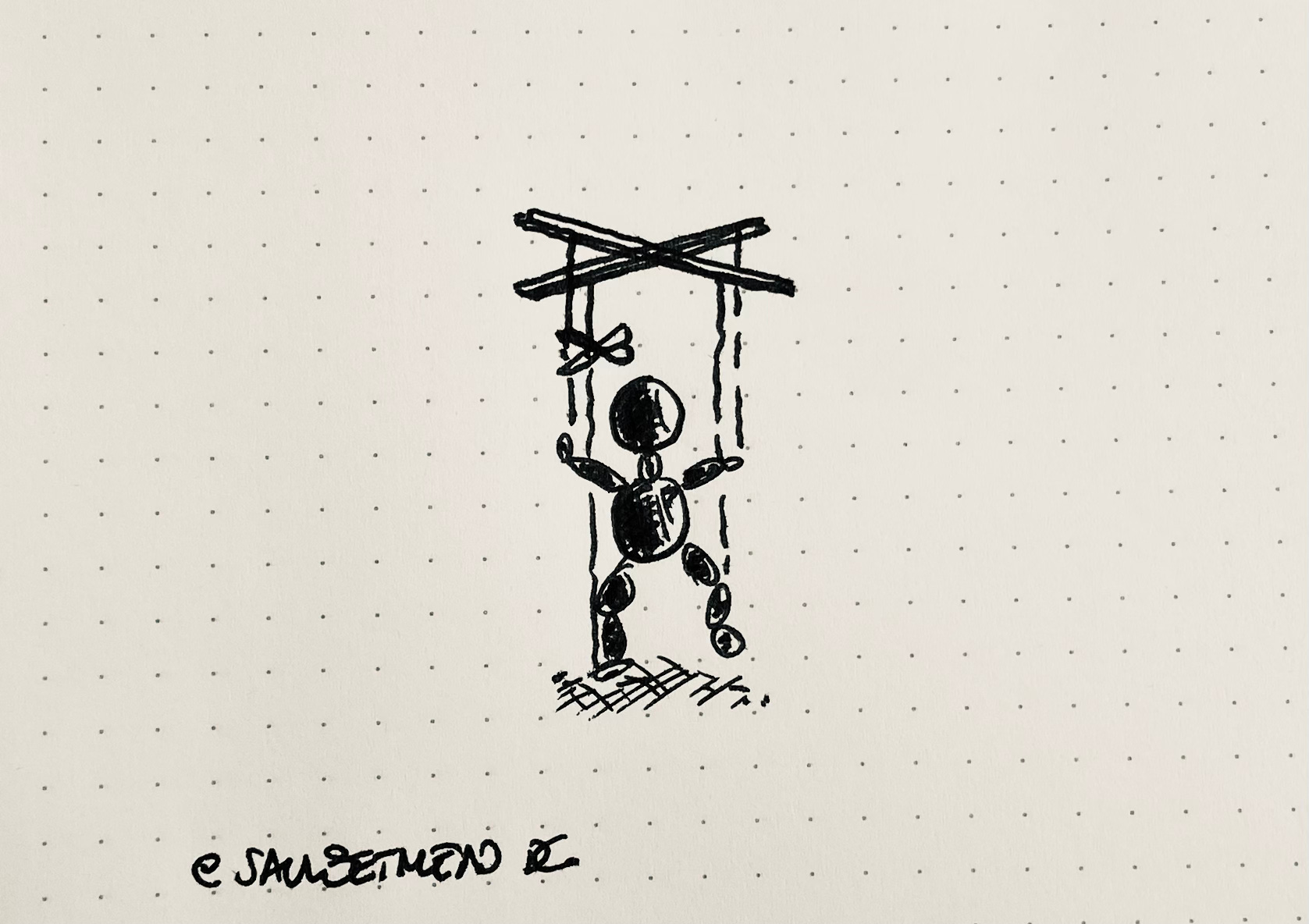
This idea could sound click bait-y: the kind of thing you see on social media that usually makes me cringe.
It could be seen as a bit preachy: ‘Who are you to tell me what I can and cannot do?’.
It could also sound like nonsense: ‘There are 8.2 billion and counting people on earth, how could that possibly be right?’.
But bear with me, I don’t think it’s wrong because behind it lies a truth each one of us is uniquely placed for impact, your ourselves, for others and the world we live in.
And right at its heart sits an idea: locus of control.
It was first suggested by psychologist Julian B. Rotter in 1954, he argued that the extent to which individuals believe they have control over the events and outcomes in their lives had a profound impact on those lives.
It suggested that there are those people who have more of an internal locus of control, where they feel that they are primarily responsible for their own successes and failures. Then there are those who have more of an external locus of control, where they feel that external forces largely determine the events and outcomes in their lives.
This is not binary, for everyone it is a continuum, and we have certain places where we are more of one and less of another, but overall it is an intriguing way of thinking about life and how we are in it.
When you have an internal locus of control:
It means taking responsibility for your actions and for outcomes, good and bad.
It means you are accountable, to yourself and what happens. And in the wonderfully complex, seemingly randomness of life, it means the real stuff is on you.
It also means you will explore what you can influence and what you can’t.
This can often be empowering, because you are then less likely to worry about things that are way out of your sphere of influence, to be troubled by things that you probably can do very little about.
But it is also nurtures your sense of belief and conviction: because it gives permission for you to stretch that sphere of influence, to find those adjacent possibles where you might be able to make the difference, perhaps where others cannot.
It is in the smallest of things: those decisions we make every day, to be one sort of person or another. To be kinder, more forgiving of others and ourselves.
To be braver, to try new things. To not wait on the sidelines watching whilst others do.
It is in these small things that the big things become.
You owe it to others.
You owe it to yourself.
Because if you don’t do it, it’s quite possible no one else will.